
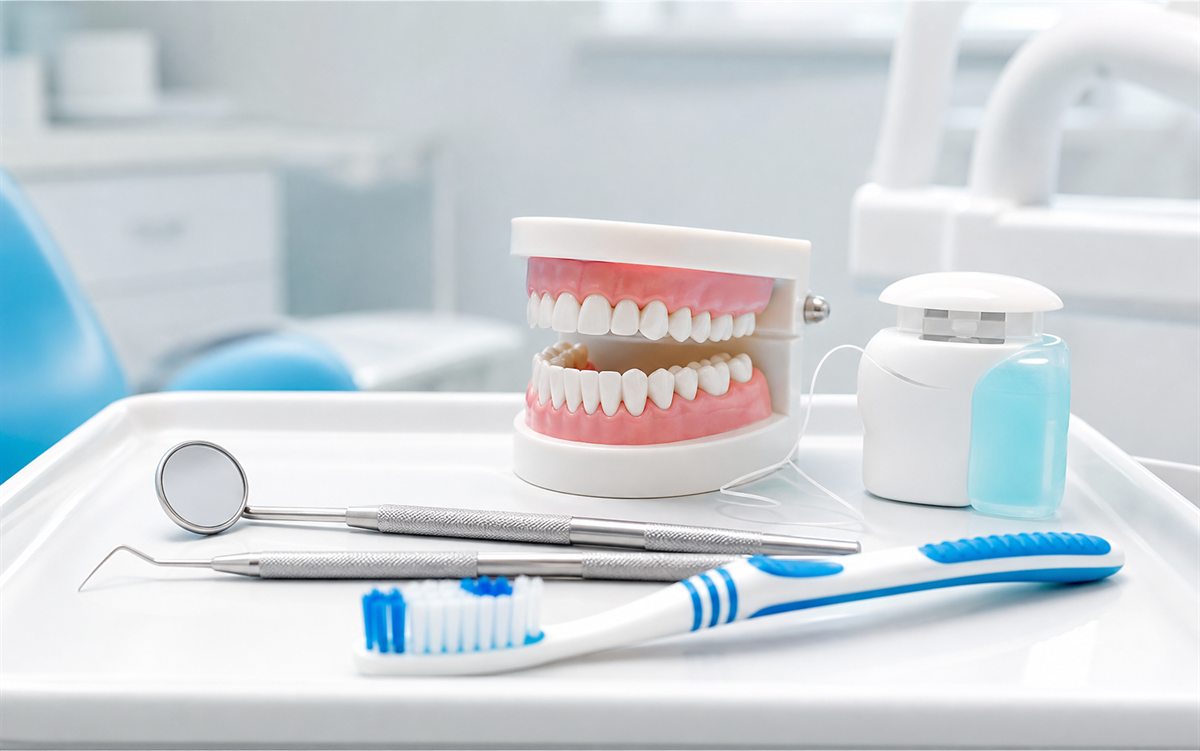
Short answer: Regular dental examinations help identify decay, gum disease, oral tissue changes and bite problems before they become harder to treat.
What a dental examination checks
A useful dental examination is more than a quick look for cavities. The dentist reviews tooth surfaces, gum health, soft tissues, bite, old fillings, crowns, implants, sensitivity, wear and anything you have noticed since your last visit. X-rays are considered only when they are likely to add useful diagnostic information.
Why early detection matters
Small areas of decay, gum inflammation and cracks are often easier to manage when they are found early. Early care can mean simpler treatment, clearer choices and less uncertainty about whether a tooth can be restored.
How recall timing is decided
Recall intervals should be based on risk. A patient with stable gum health and low decay risk may not need the same frequency as someone with recent disease, dry mouth, heavy wear or complex restorations.
Questions to ask at your check-up
Ask whether your gums are healthy, whether any fillings are weakening, whether X-rays are needed now or later, which areas are being missed while brushing and when your next review should be. A good check-up should leave you with practical next steps, not confusion.
For dental patients in Varanasi
If you are comparing dentists in Varanasi, use this guide to prepare questions before you book. The safest next step still depends on an in-person dental assessment, your symptoms, medical history and the treatment options available at the clinic.
When to book an assessment
Online information can help you prepare questions, but it cannot diagnose your mouth. Book an appointment if symptoms are new, worsening, painful, affecting eating or making you uncertain about the safest next step.
Frequently asked questions
How often should I have a dental check-up?
The timing depends on your oral health risk. Your dentist should recommend an interval after examining your teeth and gums.
Is teeth cleaning included in every check-up?
Not always. Cleaning is advised when deposits, stains or gum inflammation are present.
Can a check-up find gum disease early?
Yes. Gum measurements and bleeding patterns can help identify inflammation or deeper gum problems.